
Building a successful web application is like building a house. You need a beautiful exterior (Frontend) that attracts people, and a solid foundation (Backend) that keeps the structure standing during a storm. If you are looking for web app development services, you will quickly realize that the market is flooded with options for popular web app frameworks of 2026. Should you use React or Angular? Is Python better than Node.js? These are not just technical choices. They are business decisions.
Choosing the wrong combination can lead to slow performance, security leaks, and expensive rewrites.
In this blog, we break down the battle of Frontend vs Backend. We will analyze the most popular web app frameworks and, more importantly, tell you which ones work best together to build a scalable product.
The Frontend App Development: The Face of Your Application
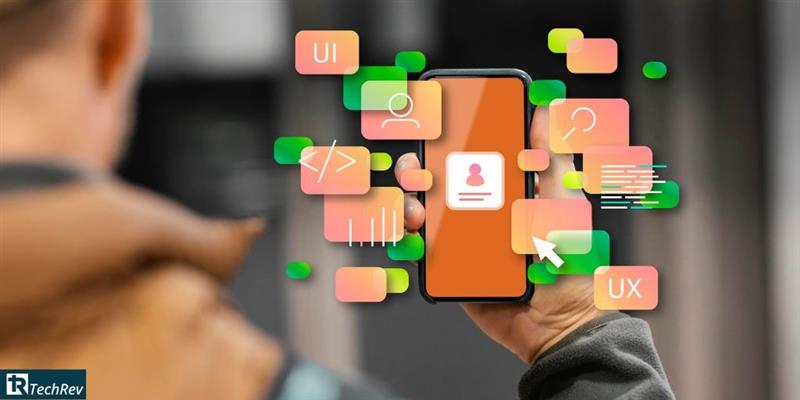
The frontend is everything your user interacts with. It determines the “feel” of your product. Is it snappy? Is it responsive? Does it look good on mobile?
When you hire a web app development company, they will likely recommend one of these three giants.
1. React.js
React is technically a library, not a framework, but it dominates the industry. It is maintained by Meta (Facebook).
- Why choose it: It uses a “Virtual DOM” to update pages instantly without reloading. It has the largest ecosystem of libraries, meaning you can find a pre-built solution for almost anything.
- Best for: SaaS dashboards, social media platforms, and e-commerce sites.
- TechRev Verdict: If you need a highly interactive UI with complex state management, React is the default choice.
2. Angular
Angular is a comprehensive framework maintained by Google. It provides a complete toolkit out of the box.
- Why choose it: It enforces strict coding standards using TypeScript. This makes it harder to write “messy” code, which is excellent for large teams.
- Best for: Large enterprise applications, banking portals, and internal management systems.
- TechRev Verdict: Choose Angular if you have a large team and need long-term stability over rapid iteration.
3. Vue.js
Vue is the community favorite. It combines the flexibility of React with the structure of Angular.
- Why choose it: It is incredibly lightweight and easy to integrate into existing projects. You can use it for a single widget or a whole page.
- Best for: Startups, rapid prototyping, and content-heavy websites.
- TechRev Verdict: Great for when you need to launch an MVP quickly without immense engineering overhead.
The Backend App Development: The Brain of Your Application

The backend is invisible, but it is where the magic happens. It handles data storage, user authentication, and business logic. A pretty frontend with a weak backend is a recipe for disaster.
1. NestJS
For years, Express.js was the standard. But for custom web app development services, we now recommend NestJS.
- Why choose it: It brings structure to Node.js. It uses modules and controllers, making your backend code look organized and professional. It is also built on TypeScript, which reduces bugs significantly.
- Best for: Real-time applications, chat apps, and microservices.
- TechRev Verdict: The best choice if your frontend is also in TypeScript (React/Angular), allowing your team to use one language across the full stack.
2. Django
Django is a high-level Python framework. It is famous for its “batteries included” philosophy.
- Why choose it: It comes with robust security features like protection against SQL injection and cross-site scripting (XSS) by default. It also includes an admin panel that saves weeks of development time.
- Best for: Fintech apps, data-heavy platforms, and secure government portals.
- TechRev Verdict: If security and speed of development are your top priorities, Django is unbeatable.
3. FastAPI
FastAPI is the rising star of 2026. It is built for speed and modern data handling.
- Why choose it: It is one of the fastest frameworks available, on par with Go and Node.js. It natively supports asynchronous operations, which is critical for handling AI and Machine Learning tasks.
- Best for: AI-driven applications, high-performance APIs, and ML integration.
- TechRev Verdict: If you are building an AI agent or need extreme performance, choose FastAPI.
The Power Pairs: Which Tech Stacks Work Best Together?
The secret to great web app development is not just picking popular web app frameworks of 2026, but picking frameworks that like each other. Here are the winning combinations we use at TechRev.
1. The “MERN” Stack (MongoDB, Express/Nest, React, Node)
- Combination: React (Frontend) + NestJS (Backend).
- Why it wins: You use JavaScript/TypeScript for everything. This allows your developers to switch between frontend and backend easily. It is fast, scalable, and efficient.
- Ideal for: Startups, SaaS platforms, and social networks.
2. The “Enterprise” Stack
- Combination: Angular (Frontend) + Spring Boot or .NET (Backend).
- Why it wins: This is pure stability. Both sides rely on strict typing and robust architecture. It is built to last for decades.
- Ideal for: Banking, insurance, and healthcare systems.
3. The “Data Science” Stack
- Combination: React or Vue (Frontend) + FastAPI or Django (Backend).
- Why it wins: Python dominates the backend data processing, while the lightweight frontend visualizes that data beautifully.
- Ideal for: AI tools, analytics dashboards, and scientific applications.
How TechRev Helps You Choose the Best Tech Stack?

We are not just a coding shop. We are a strategic web app development agency.
When you come to us, we do not just ask “What features do you want?” We ask “What is your business goal?”
- If you need to launch in 3 months with a limited budget, we might suggest React + Firebase or Ruby on Rails.
- If you are building a compliant medical app, we will suggest Angular + .NET.
- If you are building the next AI unicorn, we will architect a Next.js + FastAPI solution.
Conclusion
There is no single popular web app frameworks of 2026. There is only the best framework for your specific needs.
The battle of Frontend vs Backend is not about picking a winner. It is about finding the perfect marriage between user experience and system performance. Do not guess with your technology stack. Get expert advice.
Ready to build your next big product?
TechRev provides web app development services that are tailored to your scale. We build systems that grow with you.
Contact TechRev Today for a Free Tech Stack Consultation
FAQs
1. Can I use the same language for frontend and backend?
Yes. This is the main advantage of Node.js (specifically frameworks like NestJS). You can use JavaScript or TypeScript for both the server and the client. This simplifies hiring and development.
2. Which backend is best for mobile apps?
It depends on the app, but Node.js (NestJS) and Python (Django/FastAPI) are excellent choices because they handle JSON data natively, which is what mobile apps use to communicate.
3. Is React better than Angular?
React is more flexible and has a larger talent pool, making it easier to hire for. Angular offers more structure but has a steeper learning curve. For most startups, React is the safer bet.
4. Why is TechRev a good web app development agency?
We focus on business outcomes. We do not just write code; we ensure your architecture is scalable, secure, and cost-effective. We treat your product as if it were our own.
5. What is the fastest backend framework?
In terms of raw execution speed for web requests, Go (Golang) and Rust are the fastest. However, among the popular web frameworks, FastAPI (Python) and Fastify (Node.js) are incredibly performant.
6. Do I need a custom web app?
If your business has unique workflows or requires specific integrations that off-the-shelf software cannot handle, then yes, custom web app development services are essential for your growth.
7. How do I migrate from an old framework to a new one?
This is complex. You can use a “Strangler Fig” pattern, where you slowly replace parts of the old backend with new microservices (e.g., replacing an old PHP module with a new NestJS service) until the old system is gone.