
AI app development has entered a stage where businesses are no longer impressed by basic automation. Today’s users expect AI systems that can communicate naturally, guide decisions, and represent brands in a credible way. This shift has brought two concepts into focus: AI avatars vs digital human.
While they may look similar on the surface, they are built for very different business outcomes. The wrong choice can lead to over engineering, higher costs, and delayed launches. The right choice can improve user engagement, operational efficiency, and long-term ROI.
This blog compares AI avatar vs digital humans with a clear business lens, covering features, how they work, use cases, AI app development steps, cost expectations, and common decision-making questions.
What Is an AI Avatar?
An AI avatar is a virtual character designed to interact with users through text, voice, or basic visual elements. AI avatars are purpose-driven and usually built to handle specific workflows rather than open-ended human-like interaction.
From an AI app development perspective, AI avatars are designed for speed, efficiency, and scale.
Typical characteristics of AI avatars include:
- Structured, task-oriented conversations
- Faster development timelines
- Lower infrastructure and AI complexity
- Easy integration with existing systems
Businesses commonly use AI avatars for customer support, SaaS onboarding, internal tools, product walkthroughs, and learning platforms.
What Is a Digital Human?
A digital human is a highly advanced AI-driven entity designed to simulate real human behavior, expressions, and conversational depth. Digital humans are not built only to answer questions, but to build trust, convey emotion, and sustain long-term interaction.
From a technical standpoint, digital humans combine conversational AI in computer vision, emotional intelligence models, voice modulation, and real-time rendering.
They are often used in healthcare platforms, enterprise training, premium customer advisory roles, and brand representation where realism directly affects credibility.
AI Avatar vs Digital Human: Key Differences!
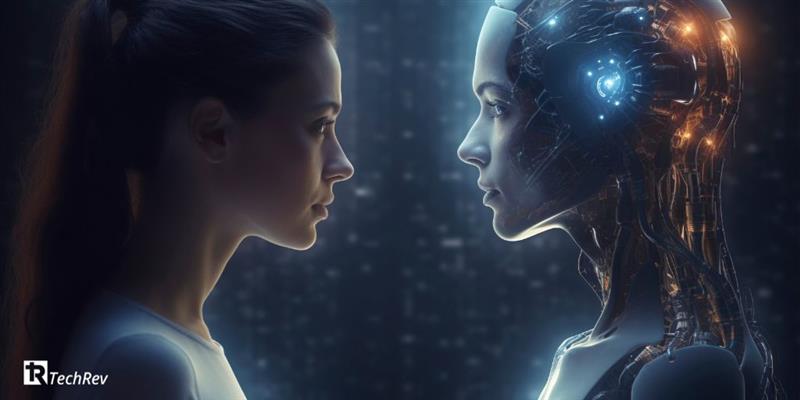
The following are some key differences that you can consider:
| Business Aspect | AI Avatar | Digital Human |
| Development complexity | Low to medium | High |
| Time-to-Market | Faster launch | Longer build cycle |
| AI depth | NLP and intent-based | NLP, vision, emotion, rendering |
| User interaction | Task-focused | Human-like, immersive |
| Cost range | Budget-friendly | Higher investment |
| Maintenance | Periodic updates | Continuous optimization |
| Best fit | Startups, SaaS, Automation | Enterprises, premium experiences |
This comparison helps businesses align expectations before investing in development.
How AI Avatars and Digital Humans Work?

Both solutions rely on layered AI architecture, but the depth and coordination differ.
AI avatars primarily use conversational AI models for intent recognition and response generation. These systems connect to backend databases, CRMs, or workflows to complete tasks accurately.
Digital humans add multiple additional layers, including facial expression mapping, emotion recognition, and real-time visual rendering. Several AI models operate together to interpret tone, behavior, and context simultaneously.
This complexity makes strong AI development services essential to ensure reliability, performance, and scalability.
Step-by-Step AI App Development Process!
The following are some key steps that you can consider while AI app development:
1: Business Use-Case Definition
This is the most critical step. Businesses must decide whether they need:
- Efficient task automation and fast responses, or
- Deep engagement, realism, and emotional connection
This decision determines whether an AI avatar vs digital human is the right solution.
2: Data Strategy and System Integration
AI avatars typically rely on conversational data, FAQs, workflows, and system APIs. Digital humans require additional multimodal data such as voice samples, facial expressions, and behavioral signals.
Data security and compliance must be built into this stage, especially for US-focused deployments.
3: AI Model Selection and Training
For AI avatars, lightweight conversational models are usually sufficient. For digital humans, advanced models must be trained for context awareness, emotional response, and visual realism.
Model accuracy, bias reduction, and scalability are addressed at this stage.
4: Application Architecture and Deployment
Cloud-native infrastructure ensures performance, reliability, and regional scalability. This step includes load handling, response latency optimization, and system monitoring.
An experienced AI app development company ensures the architecture supports future growth.
5: Testing, Monitoring, and Optimization
AI systems require continuous testing. User behavior evolves, data changes, and models must be retrained to maintain accuracy and relevance over time.
Cost Breakdown: What Businesses Should Expect?
Cost depends heavily on complexity, AI depth, and long-term goals.
Approximate development cost ranges:
- AI avatar development typically starts between $30,000 to $80,000 for MVP-level solutions.
- Digital human development often begins around $120,000 and can exceed $250,000 for enterprise-grade platforms.
Key cost drivers include:
- AI model development and training
- Backend and cloud infrastructure
- Third-party integrations
- Security and compliance requirements
- Ongoing maintenance and optimization
This is why businesses seeking custom AI solutions should align cost expectations with ROI rather than novelty.
Why Do Businesses Choose TechRev for AI App Development Services?
TechRev helps companies build AI products that deliver measurable business value. As a trusted AI app development company, TechRev focuses on scalability, performance, and real-world usability.
TechRev offers end-to-end AI development services, from strategy and architecture to deployment and optimization. Companies across the US trust TechRev for reliable execution and some of the best AI integration services in Florida, supported by global delivery expertise.
Conclusion
AI avatar vs digital human is not a technology trend comparison. It is a strategic business decision that affects cost, speed, and long-term impact.
If you want clarity, realistic cost planning, and a scalable roadmap, TechRev is ready to help.
Talk to TechRev today and get the benefits of AI integration services that create real business results.
FAQs
1. Which option is better for startups
Most startups benefit from AI avatars because they are faster to build, cost-effective, and easier to scale during early growth stages.
2. When should a business invest in a digital human
Digital humans make sense when realism, emotional engagement, or brand trust is central to the product experience.
3. Can an AI avatar evolve into a digital human later
Yes. Many companies start with AI avatars and upgrade to digital humans as data, budget, and use cases expand.
4. How long does AI app development take
AI avatars can take 2 to 4 months for an MVP. Digital humans often require 5 to 8 months or more depending on complexity.
5. What ongoing costs should businesses expect
Maintenance includes model updates, infrastructure costs, performance tuning, and security upgrades.
6. Are these AI solutions scalable globally
Yes, when built on cloud-native architecture with proper optimization and monitoring.
7. How do I choose the right AI development partner
Look for an AI development partner with proven experience, transparent cost structures, and a business-first approach.
Also Read – AI’s Impact on SDLC: How AI Changes Software Development?